Search for the size of the Middle East games market and you will get numbers that disagree with each other by billions of dollars. They are built on different definitions of the region, different treatments of hardware and in-game spending, and different guesses at how much of it is invisible to any survey.
Middle East gamingArabic localizationRTL designSaudi ArabiaUAEindustry analysis
Gaming in Saudi Arabia and the UAE - What Is Actually Verifiable
Published estimates of this market disagree by billions, so we quote none of them. Here is what holds up without a spreadsheet, and the localisation gap no market report measures.
By Arcadia Editorial5 min read

So this article does not quote one. We have not measured the market, we are not going to publish a figure we cannot stand behind, and a table of confident numbers would only tell you that we are willing to make things up.
What follows is what can actually be said with confidence, and why each of these things matters more to a player than any revenue projection does.
What is safe to say
Four claims about the region hold up without a spreadsheet, because they are structural rather than statistical:
The population skews young. Gulf demographics are weighted heavily toward people under thirty in a way that European and East Asian markets are not. That is a census fact, not a market estimate, and it explains more about regional taste than spending data would.
It is a phone-first market. Smartphone penetration arrived earlier and deeper than home-console ownership. In a market where the phone is the primary computer, the games that win are the ones that run on it well.
State money is in the sector deliberately. Saudi Arabia has made gaming and esports part of an explicit economic diversification strategy, and Riyadh has hosted large international tournaments as a result. Whatever the eventual numbers, the intent is public and documented.
Arabic support is still the exception. This is the one we have measured directly, by building this site: a portal that wants to serve Arabic readers properly has to do the work itself, because most of what it links to will not.
The thing nobody puts in a market report
Almost every market analysis measures money. Very little of it measures whether the games are actually usable in Arabic, which is what a player notices first.
There is a hierarchy of localisation, and most titles stop well short of the top:
| Level | What it means | How common |
|---|---|---|
| Nothing | English interface only | Still the default for small web games |
| Machine translation | Text is Arabic, grammar is not | Very common, and worse than English |
| Human interface translation | Menus read naturally | The realistic good outcome |
| Mirrored layout | The whole interface flips to right-to-left | Rare outside the largest titles |
| Arabic voice and community | Voice chat and support in Arabic | The top handful of games |
The gap between rows two and three is where most of the frustration lives. A machine-translated menu is not a partial win; it is a signal that nobody at the studio reads the language, and it is often harder to navigate than the English it replaced. Players who can read both frequently switch back to English on purpose.
Mirroring is where it gets genuinely difficult, and it is worth understanding why so few games do it. Flipping a layout is not flipping an image. Numbers stay left-to-right inside right-to-left sentences. Progress bars, timers and score counters have a direction that means something. Anything with a back arrow has to reverse. A game engine that was never designed for it needs the interface layer rebuilt rather than translated, which is why the games that do mirror properly are usually the ones with the largest budgets.
Why browser games fit the region well
Nothing regional about this is cultural. It is arithmetic about devices:
- Storage is the binding constraint on a shared or mid-range phone. A browser game costs nothing permanent. A 2 GB install competes with photographs.
- Data caps make a download a real decision. Loading a page is cheap in a way that a patch cycle is not.
- A browser is the same on every device. In households where the phone in use changes, a game that lives at a URL survives the change and an install does not.
- No store account is required. That removes an entire category of friction for younger players in particular.
This is why Free Fire succeeded here in the first place. It was built deliberately for modest hardware and small downloads, and that decision mattered more in this region than graphics would have.
What this means if you are building something
In rough order of return on effort:
- Get the Arabic right or leave it in English. Bad Arabic is worse than no Arabic, because it costs you the credibility that a language toggle implies.
- Mirror the layout, not just the text. A right-to-left reader navigating a left-to-right interface is doing translation work your build should have done.
- Test on a mid-range phone on a slow connection. Not a flagship on office Wi-Fi. This one change will surface more real problems than any other.
- Do not require an account to start. Every gate loses a share of the people who wanted to play, and the region is full of players who will not create one.
- Assume the calendar matters. Play patterns shift around Ramadan and local holidays. A content schedule built on a Western calendar will miss.
Our position on this
We publish in English and Arabic, with a mirrored right-to-left layout and an Arabic typeface chosen for screen reading rather than defaulted to. The Arabic on this site is written, not translated by a machine.
We mention this not as a boast but as the disclosure that makes the rest of the article checkable: everything above about the difficulty of mirroring, of numerals inside reversed text, of typeface choice, is a description of work we did, and you can inspect the result by switching this page to Arabic.
What we cannot tell you is how large the market is. If you find someone who states that with confidence and no methodology, treat the confidence as the warning.
You might also like
Desktop titles in the same genre, on the Steam store.
 Steam store
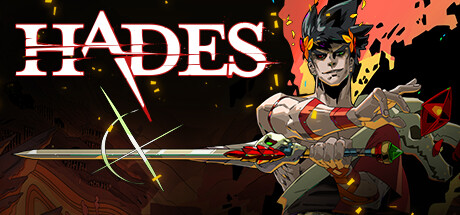
Hades
- Price
- $24.99
- Steam review score
- 98% positive
Price checked Sep 1, 2026; it may have changed since.
View on Steam(opens in a new tab)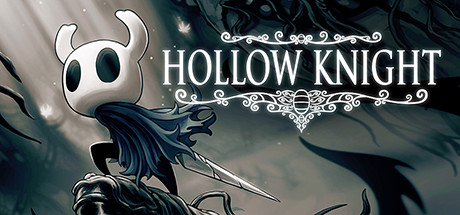 Steam store
Hollow Knight
- Price
- $14.99
- Steam review score
- 97% positive
Price checked Sep 1, 2026; it may have changed since.
View on Steam(opens in a new tab) Steam store
Celeste
- Price
- $19.99
- Steam review score
- 97% positive
Price checked Sep 1, 2026; it may have changed since.
View on Steam(opens in a new tab)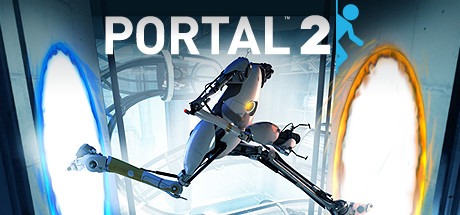 Steam store
Portal 2
- Price
- $9.99
- Steam review score
- 98% positive
Price checked Sep 1, 2026; it may have changed since.
View on Steam(opens in a new tab)These are ordinary Steam store links. We earn no commission from them, and prices shown here are indicative only — the Steam store page is authoritative.